
Overcoming Adversity: Lessons in Mental Resilience, Rowing, and Discipline

Updated: Jan 29

Navigation
Stephanie Rumble returns with an emotional and powerful episode of the Style for Life podcast. In this conversation, she interviews her son, Zack Rumble, an elite rower and mechanical engineering student, about what it truly means to face and overcome adversity. From athletic rejections to health challenges like kidney removal, Zack's journey offers practical insight into mental resilience, rowing motivation, and the reality of developing a growth mindset in high-pressure environments.
From Early Wins to Crushing Setbacks: A Journey Through Overcoming Adversity
Zack Rumble began his rowing career with what seemed like uninterrupted success. As a high school athlete, he never lost a race in his four-man boat. But life after high school wasn't so simple. Missing out on national selection, facing personal injuries, and dealing with major surgery became defining moments that forced Zack to confront what it really means to overcome adversity.

Instead of quitting, Zack used failure as fuel. Repeated setbacks tested his character and revealed a fierce internal drive. For Zack, adversity wasn’t an obstacle; it was a proving ground.
"My biggest fear is probably not exploring my true potential." ~ Zack Rumble
These moments shaped the person he is today, highlighting some of the podcast's most powerful themes:
Learning from disappointment.
Staying motivated without guarantees.
Rebuilding from rock bottom.
Using some of the most powerful overcoming adversity quotes as mindset anchors.
This episode exemplifies what it means to grow through what you go through. Zack’s story encourages us to look at our challenges not as barriers, but as essential tests of growth and character. These lessons are also at the heart of the approach taken in Bright Red’s accountability coaching programmes, which help individuals face personal challenges with clarity, structure, and support.
Rejection as Fuel: Finding Rowing Motivation After Setbacks
Zack shares that being cut from the under-19 national rowing team was a pivotal moment. Instead of walking away, he committed to improvement and returned the following year to make the squad. That one decision opened the door to future international campaigns and life-changing experiences.

Throughout his career, setbacks like missing Olympic trials, team reassignments, or suffering injuries could have ended his ambitions. But his ability to persist demonstrates deep rowing motivation, driven by the idea of leaving no stone unturned. His story illustrates that motivation isn’t something you wait for; it’s something you build through daily discipline and a clear sense of purpose.
"Hopefully I’m just at the start of an elite career where I can really be successful." ~ Zack Rumble
How Zack rebuilt his motivation:
Treated every failure as a feedback loop, not a dead-end.
Changed disciplines (from sweep to sculling with two oars) to increase opportunities
Trained through harsh winters and solo sessions to stay ahead.
Embraced the grind even when no one was watching.
Each of these choices highlights the reality of how to overcome hardships in life—not through talent alone, but through persistence and intentional action.
Injury, Surgery, and Recovery: Building Mental Resilience
One of the most powerful moments in the episode was Zack's candid reflection on his 2020 kidney removal. Already facing disruption from the COVID-19 pandemic, Zack was sidelined with a health issue that could have permanently ended his athletic career. At just 19 years old, he found himself not only battling physical recovery but also the mental struggle of feeling left behind by his peers.
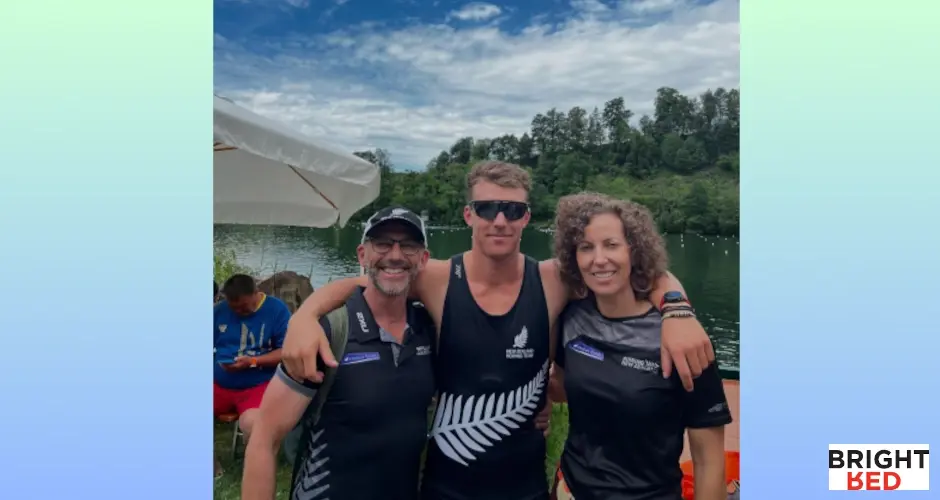
Despite the surgery and recovery, he returned stronger than ever, demonstrating what true mental resilience looks like. The experience taught him how to harness adversity and use it as a springboard instead of a stopping point.
His strategy for staying strong mentally included:
Breaking down large goals into micro-tasks.
Keeping momentum by building daily habits.
Accepting that pain and discomfort are part of growth.
These are classic strategies found in resilience training for students, athletes, and professionals alike. If you’re looking to build resilience in a more structured way, Bright Red’s education workshops offer custom programmes that support emotional wellbeing and long-term mindset development.
Embracing Change and Developing a Growth Mindset
Throughout his journey, Zack had to evolve. He wasn't always chosen for the positions or boat classes he wanted. Sometimes he was asked to switch roles, swap disciplines, or start from scratch. These changes weren’t easy, and they often came after years of mastery in one area.

Rather than resisting, he leaned into each opportunity. This is the essence of developing a growth mindset: the belief that abilities can improve with effort and strategy. His willingness to pivot, even after achieving success in one domain, highlights how growth is a continual process.
"If you take a cake and try to eat the whole thing all at once, you’ll feel sick. You need small bites." ~ Zack Rumble
Zack embodies this mindset by:
Choosing challenge over comfort.
Embracing constructive feedback from coaches.
Focusing on long-term progress over short-term wins.
These principles are foundational to developing personal resilience and long-term achievement. Zack’s adaptability is a compelling example of how staying open to change often brings unexpected growth.
What It Means to Have Discipline: Lessons in How to Build Discipline
Discipline isn't just about structure; it's about consistency in the face of obstacles. Zack's daily schedule included 5 AM training, 8 hours of classes, evening workouts, and then study. He did this without external accountability or guaranteed rewards. That level of drive requires something deeper than motivation. It requires a commitment to showing up no matter what.

This is how to build discipline in the real world:
Set specific daily routines that align with long-term goals.
Prioritise time and energy management.
Stick to your standards even when no one is watching.
These methods align with proven strategies used in sports psychology, education, and self-development literature that help to define what discipline means in a real-world context. And Zack’s experience is living proof that even the busiest schedules can be conquered with clarity and commitment.
"You just have to start. There’s no other way. Find the first thing that gets you moving." ~ Zack Rumble
Self-Discipline Examples for Students:
Waking up early consistently without hitting snooze.
Planning study blocks between physical training.
Saying no to distractions when under pressure.
Zack’s routine can inspire anyone trying to balance multiple priorities. These habits can be implemented by students, professionals, and anyone who wants to make lasting progress on their goals.
Balancing Elite Sport with Engineering Studies
While pushing toward Olympic selection, Zack was simultaneously enrolled in mechanical engineering. This created daily tension between mental fatigue and physical exhaustion. Many people might view those demands as mutually exclusive, but Zack found a way to make it work.
Balancing a demanding sport with engineering studies is no small feat. For Zack, the solution was in structure, simplicity, and commitment. He knew that if he didn’t organise his time with intention, he’d fall behind in both areas.
He shares that:
He studied engineering full-time while training 15–20 hours per week.
He treated his schedule like a job, with no room for indecision.
He passed his first year of engineering with strong grades despite the load.
This demonstrates what effective discipline strategies can achieve when combined with internal motivation and time awareness. It’s also a powerful reminder that intense passion, when paired with planning, can lead to extraordinary outcomes.
For those interested in improving work-life balance, Bright Red’s resilience and stress management workshops are designed to equip teams and individuals with tools to stay focused and manage stress effectively.
Momentum Over Motivation: Practical Strategies for Overcoming Defeat
One of the key takeaways from Zack's interview is that motivation comes and goes, but momentum sustains results. Zack often relied on sheer habit rather than feelings. On the days when he didn’t feel like getting up, he didn’t ask how he felt. He simply followed the plan.
Momentum is everything. One day becomes two, then three, and next thing you’ve built a habit." ~ Zack Rumble
He offers insight into the psychology of success, revealing that:
He would break hard days into manageable pieces.
He celebrated small wins to build momentum.
He understood that discipline often trumps inspiration.
These lessons are vital not just for athletes, but for anyone working on developing personal resilience. Zack’s mindset shows us how to keep pushing even when energy is low, and how systems often outperform bursts of enthusiasm.
Final Thoughts: The Path to Growth is Rarely Linear
Zack Rumble’s story is not just about overcoming adversity in the traditional sense. It’s about rebuilding after repeated disappointments, showing up when no one is watching, and constantly choosing growth over ease. It’s a story of perspective, persistence, and the refusal to let circumstances define one’s identity.

The lessons in this episode will resonate with anyone who:
Has faced failure or rejection.
Is rebuilding confidence after injury or loss.
Is struggling to juggle study, work, or fitness.
Wants to build authentic emotional resilience and grit.
Ultimately, this conversation between Stephanie and Zack reminds us that setbacks don’t define us. Our response to them does. Whether you're an athlete, student, or just someone trying to push through, Zack's experience offers practical, powerful insights into resilience, discipline, and what it means to stay the course.
Zack’s journey is a clear reflection of what can be accomplished through focus, adaptability, and mental toughness. His story challenges us all to ask: What would happen if we stopped waiting for the right conditions and started taking action instead? For more tools, training and guidance, explore Bright Red’s speaking services to bring resilience and accountability to your organisation.
Listen on Spotify
Frequently Asked Questions
What does it mean to have a growth mindset in elite sport?
Having a growth mindset means embracing the idea that your abilities can be developed through effort, learning, and persistence. In elite sport, it often requires adapting to new roles, pushing through setbacks, and constantly seeking improvement—even when results don’t come immediately. Zack Rumble’s story reflects this mindset clearly, as he embraced change, accepted feedback, and shifted disciplines to reach his goals.
How did Zack Rumble stay motivated after setbacks?
Zack stayed motivated by creating momentum through consistent habits. Rather than waiting for inspiration, he stuck to a disciplined routine—training early, breaking goals into manageable steps, and focusing on long-term improvement. Motivation came from the process itself, not just the outcomes. For those needing structured support, Bright Red’s accountability coaching.
What helped Zack recover mentally after surgery?
Zack relied on structure and mindset to rebuild mentally after his kidney removal. He focused on what he could control, kept his goals in view, and used daily routines to regain confidence. Emotional resilience, supported by family and purpose, helped him navigate the uncertainty of recovery. These are the same principles explored in Bright Red’s education workshops.
How do athletes deal with rejection or non-selection?
Rejection is part of high-performance sport. Athletes like Zack learn to view setbacks as opportunities to reassess, improve, and return stronger. Emotional resilience, support systems, and clear goals help them stay focused and bounce back. Learning how to process rejection is often what builds long-term success, not just talent alone.
What is sculling and how does it differ from sweep rowing?
Sculling involves each rower using two oars, one in each hand, while sweep rowing uses one oar per rower. Zack initially trained in sweep but switched to sculling, showing adaptability and commitment to continuous improvement. This switch is a perfect example of embracing challenge and redefining your strengths as needed.
How can young athletes build better discipline?
Discipline starts with setting routines and sticking to them, even when motivation is low. Zack’s schedule included early mornings, training blocks, study time, and rest—all planned with intention. Small wins, consistent habits, and self-awareness are key tools for students and athletes alike. Bright Red’s coaching and workshop services can help individuals apply these principles across health, study, and career.
How important is family support for high-performance athletes?
Family support can be a stabilising force during setbacks, transitions, and high-pressure moments. Zack’s journey was backed by the quiet presence of his parents, offering emotional resilience, practical support, and belief in his potential. It’s often those behind the scenes who help athletes stay grounded and focused.
What are some effective ways to build emotional resilience?
Emotional resilience involves learning how to respond rather than react to stress. For Zack, it meant focusing on process over perfection, accepting change, and developing internal strength. Practical tools like goal setting, reframing thoughts, and community support are often the foundation. These are also central themes in Bright Red’s resilience and stress management workshops.
What can we learn from Zack’s approach to setbacks?
Zack’s approach shows us that setbacks don’t signal failure—they signal opportunity. Each challenge became a chance to refocus, evolve, or double down on his goals. His story reminds us that the mindset we bring to difficulty is often more important than the situation itself.
How can I start building resilience in my own life?
Start small. Break down big challenges into simple daily habits. Focus on progress, not perfection. Get support from people who help you stay accountable and grounded. Whether you're managing health, work, or personal growth, structured guidance—like what Bright Red offers through their coaching and education services—can help turn resilience from a concept into a lived experience.


Comments